- Wednesday
- Thursday
Wed Sep 2
9:30 AM - 9:35 AM
Opening Remarks and Housekeeping
9:30 AM - 9:35 AM

Wed Sep 2
9:35 AM - 9:45 AM
Welcome Remarks
9:35 AM - 9:45 AM
Wed Sep 2
9:45 AM - 9:50 AM
Sponsor Remarks
9:45 AM - 9:50 AM
Wed Sep 2
9:50 AM - 10:25 AM
Keynote 1: Strengthening Security Posture in an Era of Increasing Complexity and Risk - Security Intelligence and National Resilience
9:50 AM - 10:25 AM
In an era marked by evolving threats, geopolitical uncertainty, cybercrime, and increasingly complex operational environments, strengthening security posture has become essential to protecting organisations, communities, and national interests. Building effective security intelligence requires the integration of advanced technology, real-time data analysis, risk assessment, and collaborative information sharing to identify vulnerabilities before they escalate into critical incidents. At the same time, national resilience depends on the ability of governments, businesses, and critical infrastructure providers to anticipate disruptions, respond rapidly, and recover effectively from physical, cyber, and environmental threats. By investing in proactive security strategies, skilled personnel, and resilient systems, organisations can enhance situational awareness, improve decision-making, and create a stronger foundation for long-term stability, public safety, and economic continuity.
Read More
Wed Sep 2
10:25 AM - 11:00 AM
Geopolitical Instability & Hybrid Threats - How Do They Impact Australia's Security?
10:25 AM - 11:00 AM
Geopolitical instability is no longer episodic, it is continuous, concurrent and cascading, and it is increasingly expressed through hybrid threats that blur the line between competition and conflict. For Australia, the risk is not just external aggression but the steady erosion of economic resilience, supply chains and institutional trust through coercion, cyber operations, market manipulation and grey-zone activity.
This presentation argues that Australia’s security now sits at the intersection of national security and economic performance. It will outline how hybrid threats target the systems that sustain national power, energy, critical minerals, food, finance and infrastructure, and why markets alone cannot manage these risks.
The session will set out a practical framework for government and industry to move from awareness to action.
Read More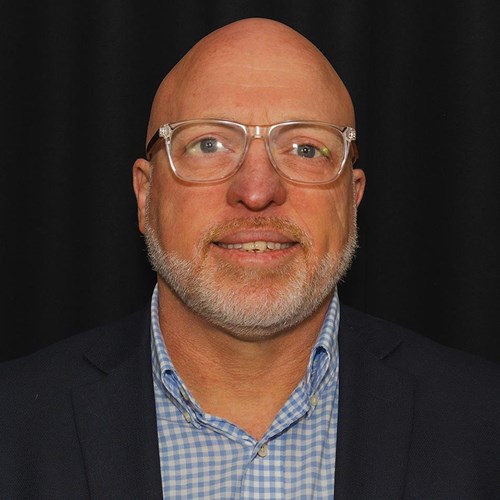
Wed Sep 2
11:20 AM - 12:00 PM
Cyberthreats – An Urgent Call to Action
11:20 AM - 12:00 PM
Alastair examines a cyber threat environment reshaped by AI, where the lines between physical, insider and cyber risk are collapsing. He sets out why organisations can no longer treat these as separate problems, and gives the audience practical actions to take back to their organisations in the morning.
Read More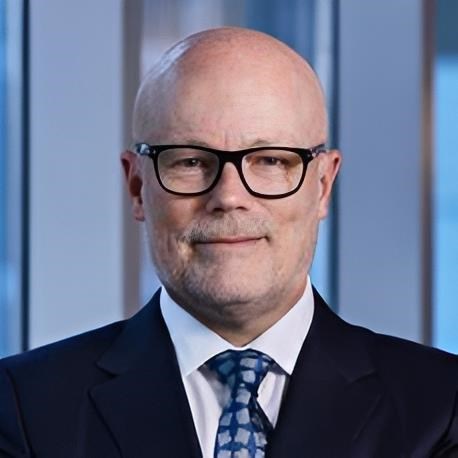
Former Special Advisor to the Prime Minister on Cyber Security
Wed Sep 2
12:00 PM - 12:30 PM
Security Assurance on Critical Infrastructure: What SFAIRP Really Demands
12:00 PM - 12:30 PM
The SOCI Act reforms and maturing RSNL obligations have fundamentally changed what adequate security looks like for critical infrastructure owners and operators. Demonstrating compliance is no longer sufficient — practitioners must prove that residual risk has been reduced to SFAIRP and produce documented evidence that is defensible under independent assurance review. Drawing on live application across the $11B Sydney Metro Western Sydney Airport program, this session unpacks Security Cases, Goal Structuring Notation, and RVTM — and what risk-based, evidence-led security practice demands of the profession.
Read More
Wed Sep 2
12:30 PM - 1:00 PM
When Leaders say 'Take a Risk Based Approach" What they Actually Mean
12:30 PM - 1:00 PM
“Take a risk-based approach” is one of the most commonly used phrases in security governance, yet it is often interpreted differently by executives, risk professionals and security teams. These differing perspectives can lead to misaligned expectations, inconsistent assessments and unclear decision-making. Drawing on global security leadership experience, this session explores how the concept of risk is understood across organisations and why the gap between risk frameworks and operational security practice persists. The presentation provides insights into how security leaders can translate threat analysis and risk assessments into clearer strategic advice for organisational decision makers.
Read More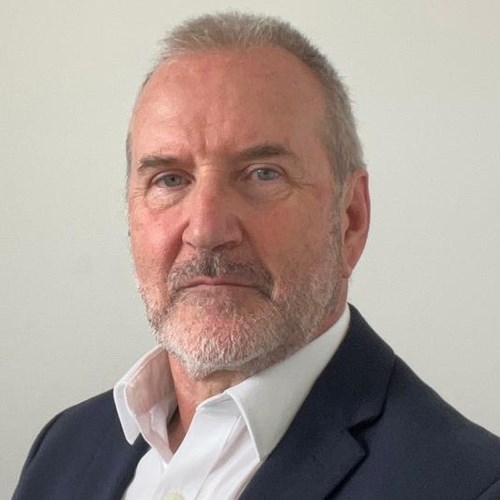
Wed Sep 2
2:00 PM - 2:40 PM
Agentic AI for the SOCI Act: Navigating the Compliance Cliff to Protect Critical Infrastructure, Including Systems of National Significance
2:00 PM - 2:40 PM
Australia’s Security of Critical Infrastructure Act introduces complex compliance challenges for critical infrastructure operators, intensified by new smart device security standards for IoT fleets. This session explores how Agentic AI can audit, evidence, and maintain SOCI compliance at scale, automating IoT assessments, and generating Statements of Compliance. Attendees will gain insight to how human-in-the-loop Agentic AI reduces compliance burden, human error, manage the SOCI “compliance cliff” and risk, while achieving defensible outcomes across critical infrastructure, assets and Systems of National Significance.
Read More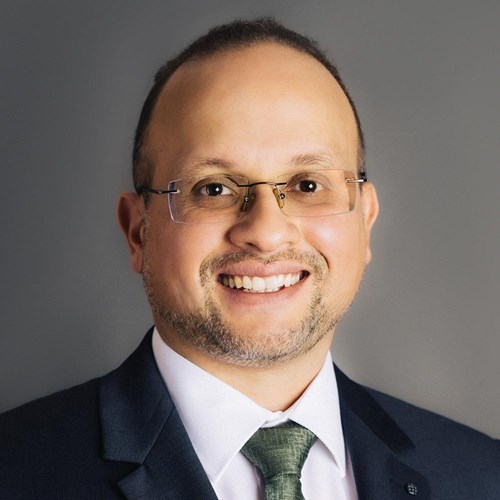
Wed Sep 2
2:40 PM - 3:10 PM
Changing of the Guard: Redefining Security in a Crowded Place - Brisbane's South Bank
2:40 PM - 3:10 PM
Crowded places are changing. Security must evolve with them. This session introduces the Hybrid Light Model (HLM), developed by South Bank Corporation for Brisbane's South Bank, one of Australia’s most visited precincts. Built on principles of safety, customer focus, and resilience, the intelligence-led HLM redefines the traditional guarding model through a more visible, proactive, and integrated approach. The session will explore a suite of enhanced security arrangements, including a modernised Security Control Room as the operational nerve centre, multi-agency integration, and behavioural detection capabilities, to collectively strengthen resilience in a crowded place.
Read More
Wed Sep 2
3:10 PM - 3:40 PM
Nationally Consistent Professional Standards for the Security Industry - if not now, when?
3:10 PM - 3:40 PM
With a workforce of over 200,000, Australia’s private security industry performs a vital and growing role as part of Australia’s national security mix. Yet as we navigate increasingly complex security threats and vulnerabilities, the inconsistent patchwork of industry regulation creates easily exploitable vulnerabilities which pose significant potential security risks.
This presentation will examine why the introduction of nationally consistent professional standards for the security industry is more important than ever.
Read More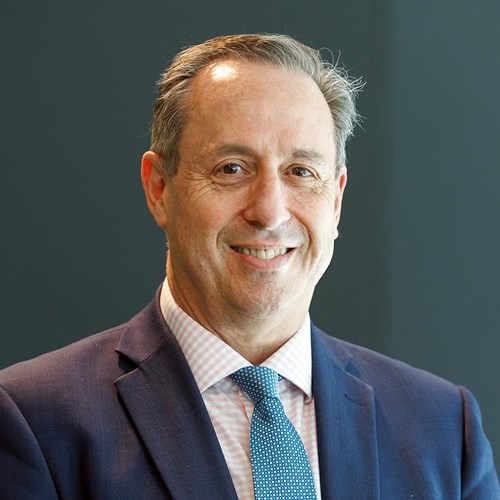
Thu Sep 3
9:00 AM - 9:05 AM
Opening Remarks
9:00 AM - 9:05 AM
Thu Sep 3
9:05 AM - 9:35 AM
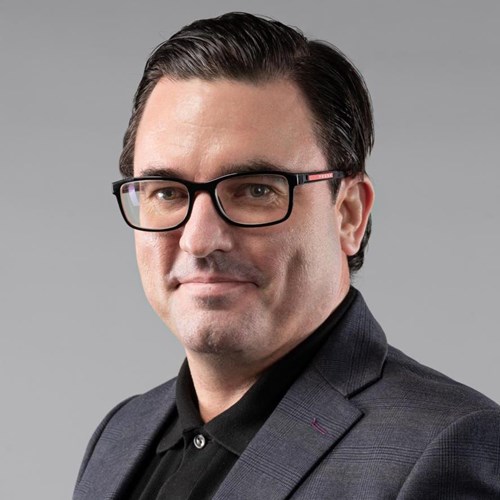
The Mandatory AI Rewrite: Leading Organisations with Built-In AI
9:05 AM - 9:35 AM
AI is not a quick automation escape, it is now a fundamental rewrite of how organisations think, operate and compete.
In this session, leading executives will share what worked, what failed, and how they are planning for what comes next.
Real learnings. Real outcomes. Leave with the insights, lessons and foresight to lead your AI rewrite with confidence.
Read More


Thu Sep 3
9:35 AM - 10:15 AM
Security 2030: A Five-Year Future Report on the Australian Private Security Industry
9:35 AM - 10:15 AM
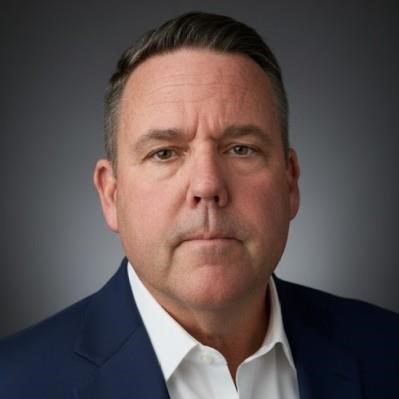
This presentation delivers the final findings of Security 2030, a two-stage research project conducted in partnership with ASIAL and funded through Edith Cowan University. Drawing on a triangulated evidence base of government threat and risk reporting, industry benchmarking data, regulatory analysis, and in-depth practitioner interviews, the research maps the current operating baseline of the Australian private security industry and charts credible capability trajectories through to 2030.
The findings confirm that 2025 represents a structural inflection point; not an incremental transition, but a convergence of regulatory, technological, workforce, and risk environment pressures that will reshape how the industry operates and how it is procured. The presentation examines six identified structural transitions, including the shift from service delivery to assurance-qualified participation, from labour deployment to intelligence-enabled capability, and from fragmented markets to capability stratification. Practitioner insights from Stage 2 are used to test, challenge, and ground these findings in operational reality.
The session concludes with evidence-informed implications for industry positioning, SME viability, workforce development, and the strategic role of peak bodies in guiding the sector through what the research describes as a defining five-year window.
Read More
Edith Cowan University
Senior Lecturer & Lead, Security and Intelligence Research Group
Thu Sep 3
10:15 AM - 10:50 AM
Sovereignty as Risk Management: Clarity, Trade-offs, Accountability
10:15 AM - 10:50 AM
Digital sovereignty is often positioned as an end state, something to be achieved through absolute control, strict locality, or isolation from global systems. In practice, this framing oversimplifies a far more complex reality. Sovereignty is not a strategy of absolutes; it is a risk management discipline.
In this session, Mark Anderson will argue that digital sovereignty should be understood as the outcome of deliberate, defensible risk decisions rather than a pursuit of total autonomy. Drawing on real world regulatory, security, and resilience scenarios, the session looks to provoke and challenge traditional thinking.
Participants will explore why no organisation operates with perfect control, security, or resilience, and why attempts to optimise one dimension in isolation often introduce new risks elsewhere. The focus is on how security leaders can move beyond slogans, separate mandated requirements from preferences, and make transparent, accountable decisions that stand up under scrutiny in an era of heightened complexity and change.
Read More
Thu Sep 3
11:10 AM - 11:50 AM
From Indicators to Action: Lessons from the Bondi Beach Terrorist Attack
11:10 AM - 11:50 AM
The Bondi Beach terrorist attack through a systems-and-governance lens, focusing on structural threat conditions, preparedness posture, and execution-phase dynamics within Australia’s crowded place protection framework, anchored by the Strategy for Protecting Crowded Places from Terrorism (National Security, 2024).
Read More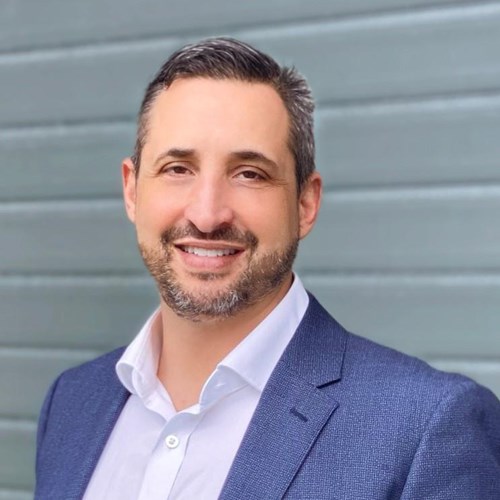
Thu Sep 3
11:50 AM - 12:20 PM
The Convergence Point: How AI, Body Cameras and Drones are Reshaping Physical Security
11:50 AM - 12:20 PM
The physical security landscape is undergoing a fundamental shift. This session explores how the convergence of Al-driven crime intelligence, real-time crime centre platforms, body-worn cameras and drone technology is transforming how corporate security teams prevent, detect and respond to threats. Drawing on operational experience in corporate environments in New Zealand and Australia, this presentation offers a practitioner's perspective on what this technology stack looks like in the field, what works, what the limitations are, and how public-private intelligence sharing is amplifying outcomes.
Read More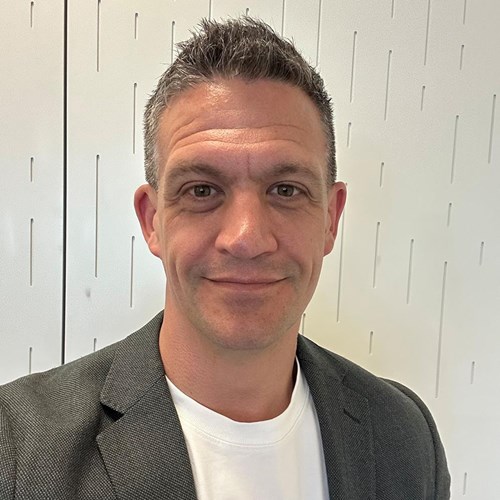
Thu Sep 3
12:20 PM - 12:50 PM
Balancing Data Centre Physical Security Controls with Construction Speed
12:20 PM - 12:50 PM
Customer Data Protection (CDP) mandates that organisations safeguard customer data against theft and unauthorised disclosure through layered security controls. These range from perimeter fencing to zone-based access restrictions governed by legitimate business need.
In APJC, the rapid pace of data centre construction amplifies this tension. High workforce volumes, compressed build programmes, and variable local regulatory environments create friction against strict security controls. The challenge is designing security frameworks robust enough to meet CDP obligations, yet agile enough to support construction velocity, phased construction milestones, and workforce scaling across diverse APJC markets.
Read More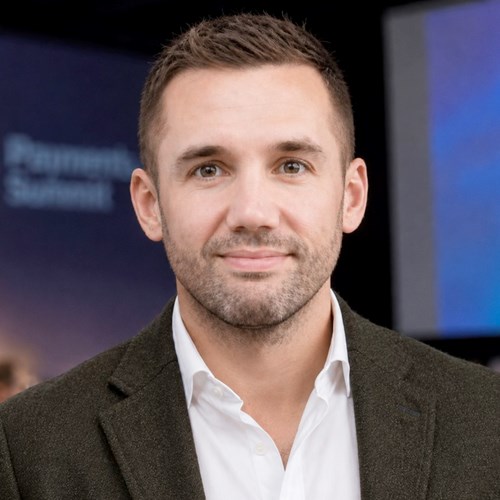
Thu Sep 3
2:00 PM - 2:30 PM
Beyond IT/OT: Closing the Physical Intelligence Gap in Critical Infrastructure Security
2:00 PM - 2:30 PM
The security industry spent a decade converging IT and OT, connecting industrial control systems to enterprise security practices. The threat landscape has moved on. State actors now pre-position through physical reconnaissance. Activist campaigns map supply chains before they strike. Organised theft rings surveil sites before cutting rail signalling cable. A single fibre cut on the Mornington Peninsula took 14,500 customers offline and put triple-zero continuity under scrutiny. The precursor signals were observable for weeks. These threats leave digital traces in social media, dark web forums, and geospatial data, but most security teams have no systematic way to detect them. This session bridges the remaining gap: applying OSINT and geospatial intelligence to the physical threat domain, and why tools built for cyber alone don't hold up under field pressure.
Read More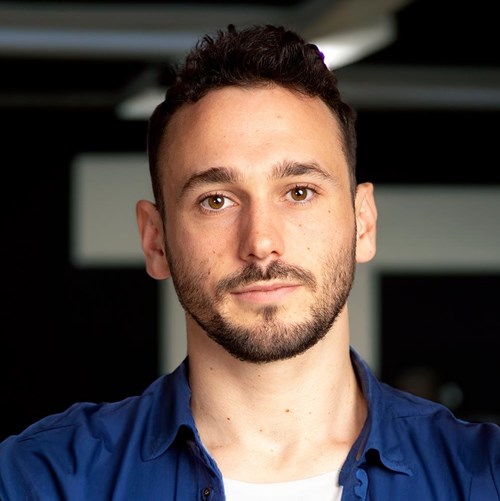
Thu Sep 3
2:30 PM - 3:00 PM
When Good People Create Risk, The Rise of the Unintentional Insider Threat
2:30 PM - 3:00 PM
In an era where organisations are investing heavily in cyber defences, one of the greatest risks increasingly comes from within, not from malicious actors, but from trusted employees, contractors and partners making seemingly harmless decisions that unintentionally expose sensitive information, intellectual property and operational systems. Drawing on decades of experience in counterintelligence, insider threat investigations and corporate security leadership, Lou Bladel and Ian Clarke will explore why the unintentional insider threat has become one of the most urgent challenges facing modern organisations. This session will examine how evolving work practices, AI adoption, remote access, third-party ecosystems and human behaviour are reshaping organisational risk, and what leaders must do to build a stronger culture of awareness, accountability and resilience.
Read More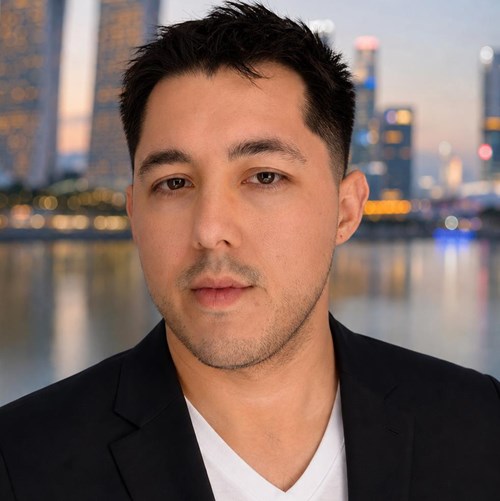
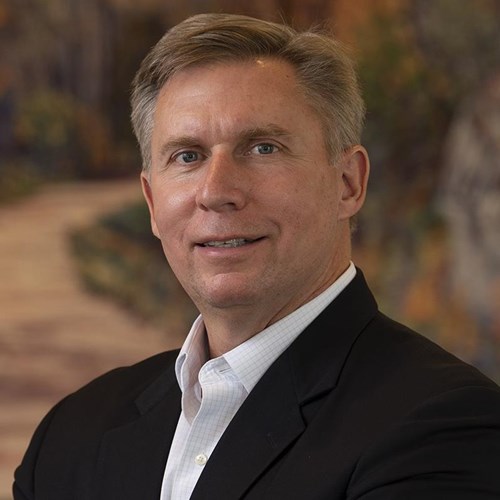
Thu Sep 3
3:00 PM - 3:35 PM
Technology enabled Crowd Management, from CCTV to Predictive Analytics: Case Study Notting Hill Carnival, London 2026
3:00 PM - 3:35 PM
The 2026 Notting Hill Carnival demonstrated how technology-enabled crowd management is reshaping public safety at major global events. Faced with attendance exceeding two million people and increasing concerns about crowd density, organisers and the Metropolitan Police Service adopted an integrated security model combining extensive CCTV coverage, live monitoring, drone surveillance, and predictive analytics to improve situational awareness and reduce the risk of crowd crushes and violent incidents. Advanced AI-powered video analytics enabled real-time monitoring of pedestrian flow, congestion hotspots, and behavioural anomalies, allowing control centres to deploy stewards and emergency responders proactively before conditions escalated. Predictive crowd modelling, supported by historical movement data and transport patterns, was also used to forecast pressure points across parade routes and transport hubs, improving barrier placement and traffic redirection strategies. The deployment of live facial recognition technology and drone-based aerial surveillance further enhanced operational intelligence. Overall, the Notting Hill Carnival case highlighted how modern urban events are increasingly relying on technology-driven intelligence systems to strengthen public safety, improve emergency response, and build resilience in complex, high-density environments.
Read More

Thu Sep 3
6:30 PM - 10:30 PM
Security Gala Dinner
6:30 PM - 10:30 PM
This ultimate networking evening, hosted in partnership with ASIAL, will bring together security professionals from across the globe to celebrate, engage and socialise with colleagues, suppliers, and clients – old and new.
Read More